

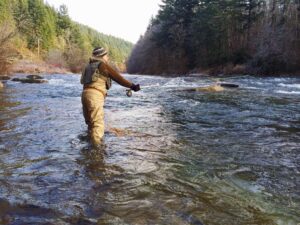
Fly fishing is a sport that has captivated the hearts of anglers for generations. There’s something magical about standing waist-deep in a river, casting a delicate fly to a rising bull trout, and feeling the tug of the line as you reel in your catch. However, for many beginners, fly fishing can seem intimidating and overwhelming. With so many different techniques, gear, and species of fish to consider, it’s easy to get lost in the details. In this article, we’ll cover a number of points that will help you on your way in this exciting sport. Whether you’re new to fly fishing or just looking to improve your skills, we hope this guide will provide you with the knowledge and confidence you need to succeed on the water.
Fly fishing equipment includes several essential components that work together to help anglers catch fish. Here is a brief overview of each of these components:
Fly Fishing Rods: Fly rods are typically longer and more flexible than other types of fishing rods. They are designed to cast lightweight flies rather than heavy lures or bait. Fly rods are often made of graphite, fiberglass, or bamboo, and they come in different lengths and weights. The weight of the rod corresponds to the weight of the fly line, so it’s essential to choose a rod that matches the type of fishing you plan to do.
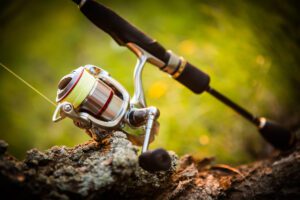
Fly Fishing Reels: Fly reels are designed to hold the fly line and provide drag when fighting fish. They are usually made of aluminum or graphite and come in various sizes to match the weight of the rod. Fly reels come in different types of drag systems, including click-and-pawl and disc drag.
Fly Fishing Line: Fly lines are thicker than regular fishing lines and have a unique taper that helps them cast the fly. They come in different weights, from 1 to 15, with lighter weights used for smaller fish and heavier weights used for larger fish. Fly lines are also available in different types, including floating, sinking, and intermediate.
Leaders and Tippets: Leaders are the thin, clear lines that connect the fly line to the fly. They are usually tapered and come in different lengths and strengths. Tippets are the thin lines that connect the fly to the leader, and they are also available in different lengths and strengths. It’s important to choose the right size leader and tippet to match the size of the fly and the fish you’re targeting.
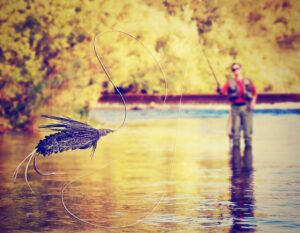
Fly Fishing Flies: Flies are artificial lures that imitate insects, baitfish, and other types of prey that fish eat. They come in different sizes, shapes, and colors and are made from a variety of materials, such as feathers, fur, and synthetic materials. It’s important to choose the right type of fly to match the fish species and the water conditions.
Casting: Casting is the act of throwing the fly line and fly out onto the water. There are several types of casts, including the overhead cast, roll cast, and sidearm cast. To execute a proper cast, it’s essential to have good timing, technique, and line control.
Mending: Mending is the act of repositioning the fly line after it has been cast. This technique is used to control the fly’s drift and keep it in the strike zone for longer periods. It’s essential to learn how to mend the line effectively to increase your chances of hooking a fish.
Setting the Hook: Setting the hook is the act of pulling the fly line to set the hook in the fish’s mouth when it takes the fly. This is a critical moment in fly fishing, and it’s essential to do it correctly to avoid losing the fish.
Stripping: Stripping is the act of retrieving the fly by pulling the line in with your hand or reel. This technique is used to imitate the movement of prey and entice fish to strike.
Drifting: Drifting is the act of allowing the fly to float naturally with the current. This technique is used to imitate the natural movement of insects and baitfish and is particularly effective in slow-moving water.
Sight Fishing: Sight fishing is the act of spotting fish in the water and casting the fly to them. This technique requires patience and good observation skills, but it can be incredibly rewarding when executed successfully.
Knowledge on the different types of fish when fly fishing is essential for selecting the right equipment and techniques. Here are some key factors to consider when targeting specific fish species:
Habitat: Different fish species inhabit different types of water, such as rivers, streams, lakes, and oceans. Understanding the habitat of the fish you’re targeting will help you select the right location to fish and the appropriate gear and flies to use.
Feeding Behaviors: Different fish species have unique feeding behaviors, such as feeding on the surface or underwater. Understanding the feeding behavior of the fish you’re targeting will help you select the right type of fly and presentation technique.
Size: Different fish species come in different sizes, and it’s important to match the size of your gear and fly to the fish you’re targeting. Using gear that is too heavy or flies that are too large can be ineffective and even harmful to the fish.
Season: Different fish species have different spawning seasons and feeding patterns throughout the year. Understanding the seasonal behavior of the fish you’re targeting will help you select the right time to fish and the appropriate gear and flies to use.
Behavior: Different fish species have unique behaviors, such as hiding in cover or feeding in schools. Understanding the behavior of the fish you’re targeting will help you select the right presentation technique and increase your chances of success.
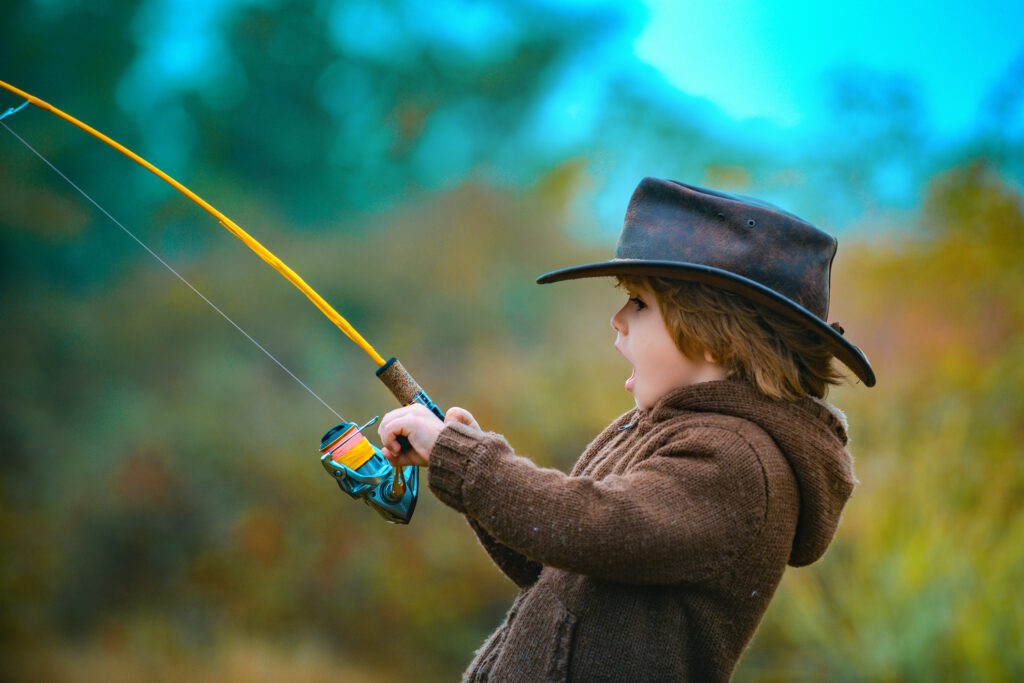
Choosing the right fly is crucial in fly fishing, as it can make the difference between a successful and an unsuccessful day out on the water. Here are some factors to consider when choosing the right fly for your fly fishing trip:
Matching the Hatch: One of the most important factors to consider when selecting a fly is to match the hatch. This means using a fly that imitates the insects or baitfish that the fish are feeding on at the time. Observing the water and identifying the types of insects or baitfish present will help you select the right fly.
Water Temperature: Water temperature can affect the behavior of fish and the types of insects or baitfish present. Cold water temperatures may require a slower-moving and smaller fly, while warmer water temperatures may require a faster and larger fly.
Fishing Location: Different fishing locations, such as streams, rivers, or lakes, may require different types of flies. For example, fishing in a stream with fast-moving water may require a weighted fly to help it sink quickly, while fishing in a lake may require a buoyant fly to float on the surface.
Time of Day: The time of day can also affect the behavior of fish and the types of insects or baitfish present. Using a fly that imitates the insects or baitfish that are active during the time of day you’re fishing can increase your chances of success.
Personal Preference: Finally, personal preference can also play a role in selecting the right fly. Some anglers have favorite patterns or colors that have worked well for them in the past, and sticking with those patterns can boost their confidence and increase their chances of success. At the end of the day, Don’t over think it! Watch this great video we have provided below that will help you choose the right fly.
Fly fishing can be a safe and enjoyable activity, but there are some safety considerations that anglers should keep in mind. Here are some important safety tips to follow when fly fishing:
Wear Proper Clothing: Wearing appropriate clothing is essential for staying safe while fly fishing. This includes wearing a hat, sunglasses, and clothing that is appropriate for the weather and water conditions. In cold weather, wearing layers and insulated clothing is essential for staying warm and preventing hypothermia.
Be Aware of Your Surroundings: It’s important to be aware of your surroundings while fly fishing, including watching for obstacles such as rocks, logs, or underwater debris. Additionally, be mindful of any wildlife or other anglers in the area.
Use Wading Staff and Boots: When wading in water, using a wading staff can provide stability and prevent slips and falls. Wearing proper wading boots with non-slip soles is also essential for preventing falls and injuries.
Practice Proper Casting Technique: Practicing proper casting technique can prevent injury to yourself or others. Always check for obstacles and other people before casting, and avoid casting with the wind at your back.
Use Appropriate Gear: Using appropriate gear, including a properly sized rod and line, can help prevent injuries while fly fishing. Always check your gear for any damage or wear and replace it if necessary.
Follow Fishing Regulations: Finally, it’s important to follow fishing regulations and obtain any necessary permits or licenses before fishing. This helps ensure that you’re fishing in a safe and legal manner.
Fly fishing is not just about catching fish; it’s also about respecting the environment and preserving the natural resources for future generations. Here are some important ethics and conservation considerations when fly fishing:
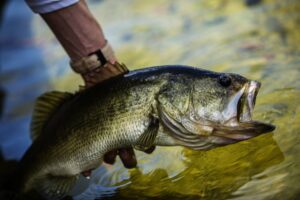
Practice Catch-and-Release: Catch-and-release fishing is an important part of conservation efforts in fly fishing. This means releasing the fish back into the water unharmed, so they can continue to grow and reproduce. It’s important to handle the fish gently and avoid removing them from the water for too long.
Respect the Environment: Fly fishing is all about enjoying and respecting the environment. It’s important to leave the area as you found it, picking up any trash or litter that you find. Additionally, avoid disturbing any wildlife or damaging the habitat.
Follow Fishing Regulations: It’s important to follow fishing regulations and obtain any necessary permits or licenses before fishing. This helps ensure that you’re fishing in a legal and responsible manner.
Use Proper Fishing Gear: Using appropriate gear, including barbless hooks and non-toxic fishing weights, can help minimize the impact of fishing on the environment.
Support Conservation Efforts: Supporting conservation efforts through donations, volunteering, or participating in conservation activities can help preserve the natural resources and habitats for future generations.
Educate Others: Finally, educating others about the importance of ethics and conservation in fly fishing can help spread awareness and promote responsible fishing practices.
In conclusion, fly fishing is an exciting and rewarding sport that requires patience, skill, and a willingness to learn. As a beginner, it’s essential to start with the basics, such as selecting the right equipment, mastering casting techniques, and understanding the habits of the fish you’re targeting. With practice and perseverance, you can develop the skills necessary to become a successful fly fisher. Remember to stay safe on the water, respect the environment, and enjoy the experience of being in nature. With the right mindset and approach, fly fishing can be a lifelong pursuit that offers endless opportunities for learning, growth, and adventure.
As an avid fisherman myself, I know firsthand how important it is to have access to accurate information and reliable gear when it comes to catching the big one. That's why I started Fishing Tips Pro - to provide fellow anglers like you with a one-stop-shop for all things fishing.
Whether you're a seasoned pro or a novice just starting out, our team of experts is dedicated to bringing you the latest and greatest in fishing tips, techniques, and gear reviews. We cover everything from fly fishing for trout in mountain streams to trolling for giant marlin in the deep blue sea.
But Fishing Tips Pro isn't just about information - it's about community. We believe that the best way to improve your skills and increase your enjoyment of the sport is to connect with other anglers who share your passion. That's why we encourage our readers to join the conversation by commenting on our articles, sharing their own tips and stories, and connecting with us on social media.
So if you're looking for a reliable source of fishing information and a supportive community of fellow anglers, you've come to the right place. Welcome to Fishing Tips Pro - we can't wait to help you catch your next big fish and read your story about it!