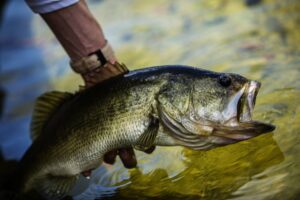


Bull trout fishing can be a thrilling and challenging experience for anglers of all skill levels. With their aggressive nature and large size, these fish are highly sought after by many fishermen. However, catching bull trout can be tricky, and it’s important to have a good understanding of their behavior and habitat in order to be successful. In this article, we’ll provide you with some valuable tips and techniques for catching bull trout, including information on their diet, preferred habitats, and the best types of gear to use. Whether you’re a seasoned angler or just starting out, this guide will help you improve your chances of landing one of these elusive and impressive fish. So, grab your rod and let’s dive into the world of bull trout fishing!
Bull trout are a cold-water fish species that inhabit freshwater systems across North America. Understanding their habitat and behavior is crucial to successfully catching them. Bull trout typically live in large, deep, and clear streams, rivers, and lakes with cold, clean water. They prefer water temperatures below 60°F and are commonly found in areas with high oxygen levels. Bull trout often seek cover in deep pools or under large rocks to avoid predators and conserve energy. They are known to be particularly sensitive to changes in water temperature, water quality, and habitat destruction.
When it comes to behavior, bull trout are predatory fish and feed on other fish species, such as whitefish, sculpin, and other small trout. They are known to be active and opportunistic feeders, particularly during periods of low light, such as dawn and dusk. During the day, they are often found in deeper waters or in areas with cover. Bull trout are also known to move upstream during spawning season, typically between late August and early October. During this time, they are more aggressive and can be easier to catch. Understanding these patterns and behaviors can help anglers target bull trout more effectively.
Bull trout fishing requires a specific set of gear and equipment to make the most out of your fishing experience. One of the most essential pieces of equipment for bull trout fishing is a good quality fly rod that can handle the weight of the fish. A 9-foot, 5-7 weight rod is recommended for most bull trout fishing situations. You will also need a fly reel with a good drag system to help you land the fish. A floating line with a 9-12 foot leader is the best choice for bull trout fishing as it allows for better presentation of the fly. Flies are also an essential part of bull trout fishing gear, and patterns such as leeches, streamers, and nymphs work well. You should also carry waders and wading boots to protect yourself from the cold water.
Another essential piece of gear for bull trout fishing is a landing net. A good quality net with a soft rubber mesh is preferred as it reduces the amount of damage done to the fish during landing. A pair of polarized sunglasses is also important as they help you see through the water surface and spot fish easily. Additionally, you should carry a set of pliers or forceps to help you remove hooks from the fish’s mouth. A good quality backpack is also essential to carry all your gear and supplies, including snacks, water, and a first aid kit. Finally, it is important to remember that bull trout are a threatened species, and it is essential to practice catch-and-release to help conserve the population.
Identifying prime bull trout fishing locations is essential for any angler looking to catch this elusive species. Bull trout are typically found in cold, clear streams, rivers, and lakes in the western part of North America. They tend to inhabit areas with plenty of cover, such as undercut banks, large rocks, and deep pools. Prime bull trout fishing locations often have a combination of deep and shallow water with plenty of structure, such as logs or rocks, where they can hide and ambush their prey.
In addition to this, bull trout are known to migrate upstream during the spawning season, which typically occurs in late summer or early fall. This means that prime bull trout fishing locations are often found in streams or rivers that have access to spawning grounds. Some of the best fishing spots for bull trout are located in remote, wilderness areas, which can be more challenging to access but can offer incredible fishing opportunities. It’s important to do your research and talk to local fishing experts to identify the best bull trout fishing locations in your area.
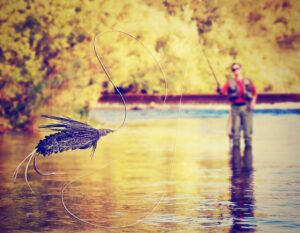
Fly fishing is a popular technique for catching bull trout, and there are several techniques that can increase your chances of success. One technique is to use a streamer fly, which mimics small fish that bull trout feed on. A slow, steady retrieve with occasional pauses can entice bull trout to strike. Another technique is to use a nymph fly, which imitates aquatic insects that bull trout commonly feed on. A dead drift presentation, where the fly drifts naturally with the current, can be effective.
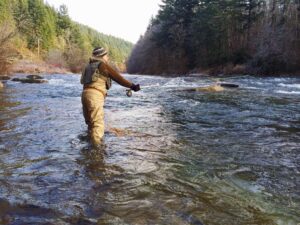
When fly fishing for bull trout, it’s important to use the appropriate gear and equipment. A 5-7 weight fly rod with a fast action is typically suitable for targeting bull trout. Leaders and tippets should be strong and durable, as bull trout can put up a fight when hooked. It’s also important to use barbless hooks and practice catch-and-release techniques to protect bull trout populations.
Fly fishing for bull trout can be challenging, but it can also be rewarding. Understanding their behavior and habitat, selecting the right flies, and using proper techniques can increase your chances of success. As with any fishing technique, it’s important to be patient and persistent, and to enjoy the experience of being out in nature.
The best time of day and season for bull trout fishing can vary depending on factors such as weather, water temperature, and location. Generally, early morning and late afternoon are prime times for bull trout fishing, as the cooler temperatures and low light conditions make them more active and likely to feed. During the middle of the day, bull trout may retreat to deeper waters or areas with cover, making them more difficult to catch.
In terms of seasons, the best time for bull trout fishing is typically during the late summer and fall, when water temperatures are cooler and bull trout are more active. This is also when bull trout typically migrate upstream to spawn, making them more accessible to anglers. However, some areas may have regulations that limit fishing during spawning season to protect bull trout populations, so it’s important to check local regulations before heading out.
Overall, the best time of day and season for bull trout fishing can vary depending on factors such as location and weather conditions. As with any type of fishing, it’s important to do your research and talk to local experts to determine the best times and locations for catching bull trout in your area.
When presenting bait to bull trout, there are several strategies that can increase your chances of success. One effective strategy is to use a drift rig, which involves suspending bait at a specific depth and allowing it to drift naturally with the current. This technique can be particularly effective for targeting bull trout in deep pools or runs. Another strategy is to use a float rig, which involves attaching a small float to your line to keep your bait at a specific depth. This technique can be effective when targeting bull trout in shallower water.
When selecting bait for bull trout, it’s important to choose options that mimic their natural prey, such as small fish or aquatic insects. Live bait, such as nightcrawlers or small minnows, can be effective, as can artificial baits such as spinners or spoons.
It’s important to present bait in a way that looks natural and enticing to bull trout. This may involve varying the speed or depth of your retrieve, or changing the color or size of your bait to match local conditions. It’s also important to be patient and persistent, as bull trout can be finicky and may require multiple presentations before striking.
Bull trout are a threatened species in many areas and are highly valued by anglers as a sport fish. Catch and release practices are important for conserving the population of bull trout and ensuring their survival. Here are some best practices for catch and release of bull trout:
1. Use barbless hooks: Barbless hooks are easier to remove from the fish’s mouth, causing less harm to the fish during the release process.
2. Use proper fishing gear: Use appropriate fishing gear, such as a lightweight fishing line, to reduce stress on the fish.
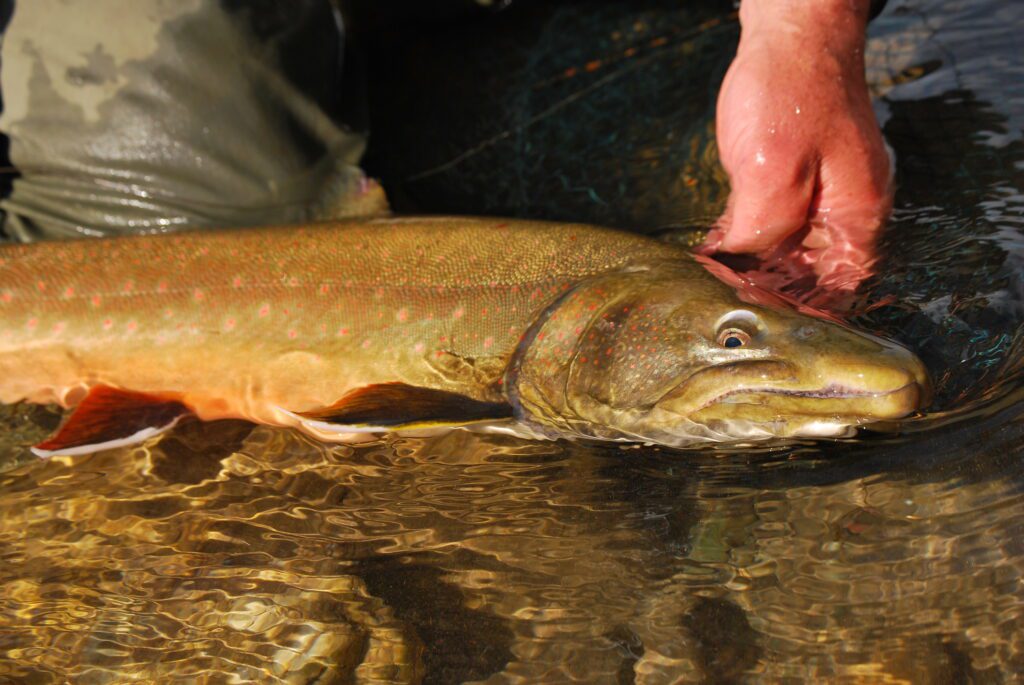
3. Minimize the time the fish is out of the water: Keep the fish in the water as much as possible and handle it gently. If you need to take a photo, keep the fish in the water and hold it carefully. Avoid squeezing the fish or placing it on dry surfaces.
4. Revive the fish before release: Hold the fish gently in the water and move it back and forth slowly to help water flow over its gills. This will help the fish recover from the stress of being caught.
5. Release the fish quickly: When the fish is ready to swim away, release it gently back into the water. Make sure it has fully recovered and is swimming strongly before letting it go.
By following these guidelines, anglers can help protect bull trout populations while enjoying the sport of fishing.
Bull trout are predatory fish that feed on a variety of prey items, including insects, crustaceans, and small fish. Their diet can vary depending on the time of year and the availability of food in their habitat. As such, it is essential to have a good understanding of their diet when selecting lures for bull trout fishing.
During the early season, bull trout primarily feed on insects such as stoneflies, caddisflies, and mayflies. Using nymphs and wet flies that imitate these insects can be effective in catching bull trout during this time. Later in the season, as the water temperatures warm up, bull trout start to shift their diet to small fish such as minnows, sculpins, and dace. Streamers and larger baitfish imitations are effective in catching bull trout during this time.
It is also important to consider the color and size of the lure when selecting the appropriate lure for bull trout fishing. Generally, natural colors such as brown, olive, and black work well in imitating the prey items in their habitat. As for the size, using lures that are appropriate to the size of the prey in their habitat is recommended. Using smaller lures during the early season and larger lures later in the season can be effective in catching bull trout.
Bull trout fishing can be a challenging and rewarding experience for any fishermen. With their predatory nature and beautiful coloring, bull trout are a prized catch for many anglers. However, it is important to remember that bull trout are a threatened species, and conservation efforts are essential to protect their population. Practicing catch-and-release and using appropriate gear and lures can help preserve their habitat and ensure their survival for future generations. Whether you are an experienced angler or a novice, bull trout fishing offers a unique opportunity to connect with nature and experience the thrill of catching these magnificent fish.
As an avid fisherman myself, I know firsthand how important it is to have access to accurate information and reliable gear when it comes to catching the big one. That's why I started Fishing Tips Pro - to provide fellow anglers like you with a one-stop-shop for all things fishing.
Whether you're a seasoned pro or a novice just starting out, our team of experts is dedicated to bringing you the latest and greatest in fishing tips, techniques, and gear reviews. We cover everything from fly fishing for trout in mountain streams to trolling for giant marlin in the deep blue sea.
But Fishing Tips Pro isn't just about information - it's about community. We believe that the best way to improve your skills and increase your enjoyment of the sport is to connect with other anglers who share your passion. That's why we encourage our readers to join the conversation by commenting on our articles, sharing their own tips and stories, and connecting with us on social media.
So if you're looking for a reliable source of fishing information and a supportive community of fellow anglers, you've come to the right place. Welcome to Fishing Tips Pro - we can't wait to help you catch your next big fish and read your story about it!